
How to choose the right foundation shade: a guide to skin tones, undertones and types of foundation

Foundation is one of those make-up products where it really shows whether you've chosen well. The right shade melts into your skin so that nobody notices it: your complexion looks more even, your skin looks rested, and there's no visible line anywhere. The wrong shade, on the other hand, immediately gives away that something on your face doesn't belong. Your face can look grey, orange or pink, and a line appears on your jaw where the foundation ends.
The good news is that choosing isn't a matter of luck. Once you know your skin tone and your skin's undertone, the choice narrows down to a few shades. And you can find the right one among them with a few simple tests.
Why foundation at all?
Foundation is a skin-coloured make-up product that you apply to your face to even out your complexion. It covers redness around the nose, darker areas, tiny visible veins and blemishes, and blurs the look of pores. Blush, bronzer and highlighter then sit more beautifully on skin that has been evened out like this.
Foundation doesn't necessarily mean a thick layer of make-up. Most modern foundations let you build up the coverage yourself: one thin layer for an everyday, natural look and extra layers where you need them. Some foundations also care for your skin or protect it from the sun.
What types of foundation are there?
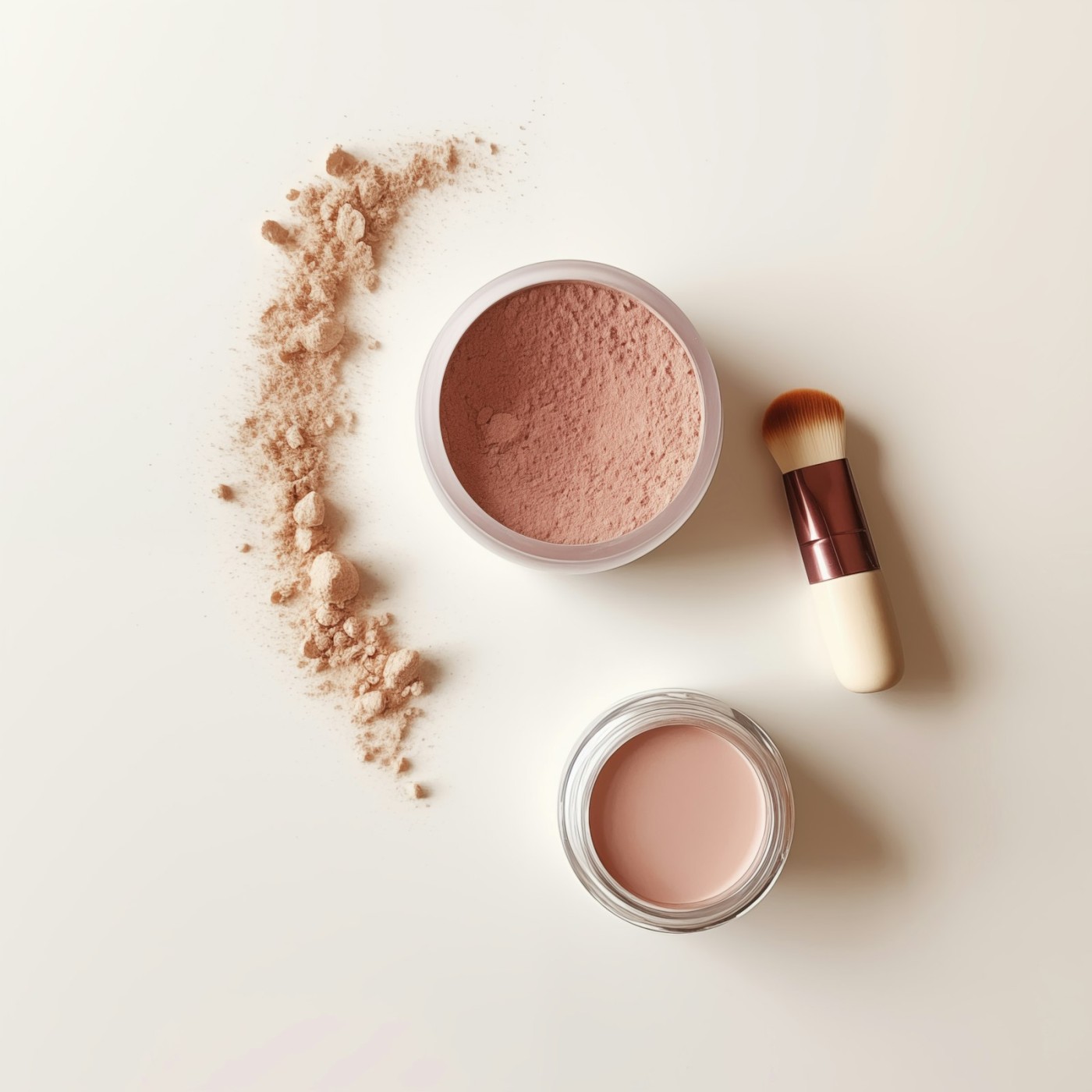
Foundations differ in texture, coverage and finish (matte, satin or radiant). Which one suits you depends mainly on your skin type and the look you want.
- Liquid foundation is the most widespread. You can apply it very thinly or in several layers, so it suits most skin types. Those with a radiant finish are especially pleasant for dry and mature skin, because they don't emphasise dry areas.
- Loose mineral foundation (loose powder) is made from finely ground mineral pigments. It feels very light on the skin, and you build up the coverage with a brush: from sheer to full. It suits oily, combination and sensitive skin, because it contains few ingredients.
- Pressed (compact) powder is powder in solid form that you apply with a sponge or brush. It's handy for your bag and for quickly taking down shine during the day.
- Tinted moisturiser (skin tint) is something between a cream and a foundation. The coverage is light, and your skin stays visible and fresh. It often contains an SPF too.
- Cream and stick foundations have a thicker texture and higher coverage. They are mainly used for special occasions or to cover individual areas.
Whatever the type of foundation, the same rule applies: even the best formula won't look good if the shade isn't right. So let's take a closer look at it.
Foundation shade = skin tone + undertone
Every foundation shade is described by two properties: how light or dark it is (skin tone) and what its undertone is. Both have to match when you choose.
1. Skin tone: how light is your skin?
Skin tone is what we see at first glance. Most brands range it from very light, through light, medium and tan, to dark and very dark. The easiest way to judge your skin tone is in a mirror by the window, in daylight and without make-up.
Bear in mind that your skin tone changes over the year. In winter, most people's skin is lighter, and in summer slightly darker and warmer. That's why many people have two foundation shades, one for winter and one for summer, or mix them in the months in between.
2. Undertone: cool, warm or neutral?

The undertone is the colour hidden beneath the surface of the skin. It doesn't change, even when you tan. It's precisely because of the undertone that a foundation can be the right depth yet look “foreign” on your face.
- Cool undertone: the skin has a pink, reddish or bluish cast.
- Warm undertone: the skin has a yellow, golden or peachy cast.
- Neutral undertone: the skin has a balance of cool and warm tones.
- Olive undertone is a special case: the skin has a greenish or greyish-gold cast. That's why some brands label it separately.
How do you find out your undertone? A few simple tests:
- The vein test. In daylight, look at the veins on the inside of your wrist. If they are blue or purple, you most likely have a cool undertone. If they are greenish, you have a warm undertone. If you can't tell or see both, your undertone is probably neutral.
- How your skin reacts to the sun. If you tan quickly and rarely burn, your undertone is probably warm. If you burn quickly and tan with difficulty, it's probably cool. If it's somewhere in between, you're most likely neutral.
- Silver or gold jewellery. If silver jewellery suits you better, your undertone is often cool; if gold, it's warm. If both suit you well, your undertone is probably neutral.
No test is a hundred per cent reliable, so it's a good idea to do all three. If the results match, you can be fairly sure.
How to test a shade before you decide

Once you know your skin tone and undertone, pick two or three shades that seem closest. Then compare them directly on your skin:
- Test on your jaw, not on your hand. The skin on your hand is almost always a different colour from your face. Apply thin stripes of the shades to your lower cheek and jaw and blend them lightly. The right shade is the one that almost disappears into your skin, with no visible line.
- Compare with your neck. Foundation also has to blend with your neck and décolleté, otherwise your face looks like a mask. If you're torn between two shades, choose the one closer to the colour of your neck.
- Look in daylight. Artificial light in the bathroom or in a shop changes colours. Natural light by a window is the most reliable, and then check the shade under different lighting too.
- Wait a few minutes. Once the foundation dries and mixes with your skin's natural oils, its colour can still change slightly.
- Don't be afraid to mix. If you're between two shades, you can mix both. This gives you exactly your shade, and you can adjust the ratio in winter and summer.
Buying foundation online can be a challenge, because you can't try the shade in person. That's why it's especially helpful to know your undertone and skin tone before you buy and to read the shade description carefully.
How to read IDUN Minerals shades
The Swedish brand IDUN Minerals names its foundation shades after old Scandinavian names, such as Saga, Ingrid, Siri or Embla. The name alone tells you nothing about the colour, which is why each name comes with a description giving the depth and undertone. The Ingrid shade of the loose mineral foundation, for example, is light-medium with a cool undertone.
An important tip: the same name doesn't necessarily mean the same shade across all products. Ingrid or Siri may be described slightly differently for the loose powder and for the liquid foundation, so always read the description for the product you're buying.
IDUN loose mineral foundation was the brand's first product and is still one of its most popular. It has just four ingredients, light to full coverage and, according to the manufacturer, a mineral SPF 15. It's available in more than 20 shades with a cool, warm, neutral or olive undertone:
| Shade | Depth | Undertone |
|---|---|---|
| Jorunn | lightest | neutral |
| Saga | very light | neutral |
| Signe | light | neutral |
| Freja | light | warm |
| Gylla | light | cool |
| Disa | light-medium | neutral |
| Ingrid | light-medium | cool |
| Siri | medium-light | neutral |
| Svea | medium-light | warm |
| Edda | medium-light | cool |
| Inga | medium | neutral |
| Ylva | tan | neutral |
| Embla | medium-dark | warm |
| Sigrid | olive beige | warm |
| Runa | olive beige | neutral |
| Ragnhild | light brown | warm |
| Daga | light brown | cool |
| Ingeborg | medium brown | warm |
| Hilda | medium brown | neutral |
| Siv | dark brown | warm |
| Yrsa | dark brown | neutral |
| Helga | very dark | neutral |
Shade descriptions are based on the official IDUN Minerals guide.
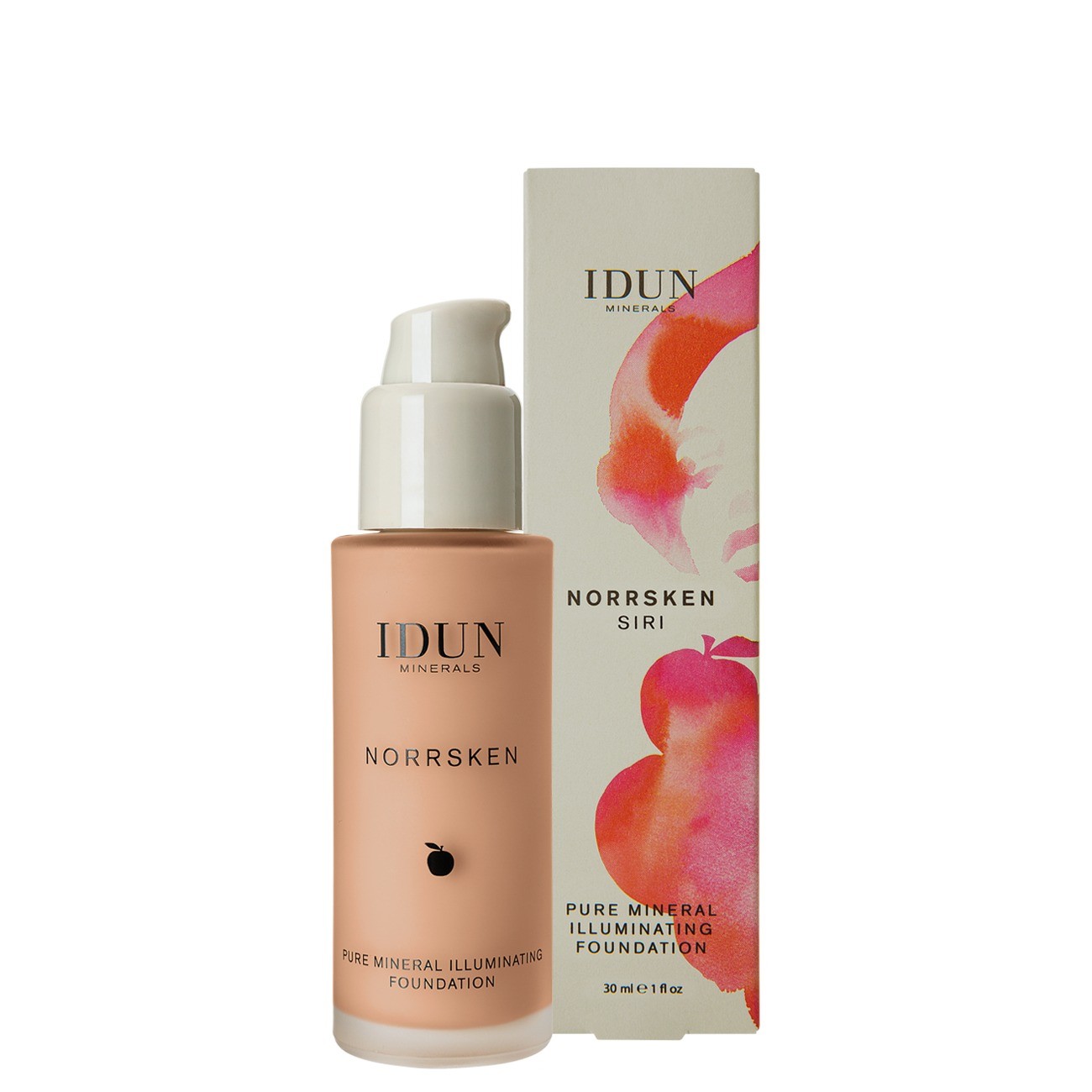
If you prefer liquid foundation, IDUN has Norrsken, a silky mineral foundation with light to medium coverage and a radiant finish, containing vitamin E and cranberry seed oil. The brand's newer liquid foundation is Hydra Soft, with a light, airy texture, buildable medium coverage and a soft, luminous finish. According to the manufacturer, it improves skin hydration after just one day of use and blurs the look of pores and fine lines.
How to apply foundation
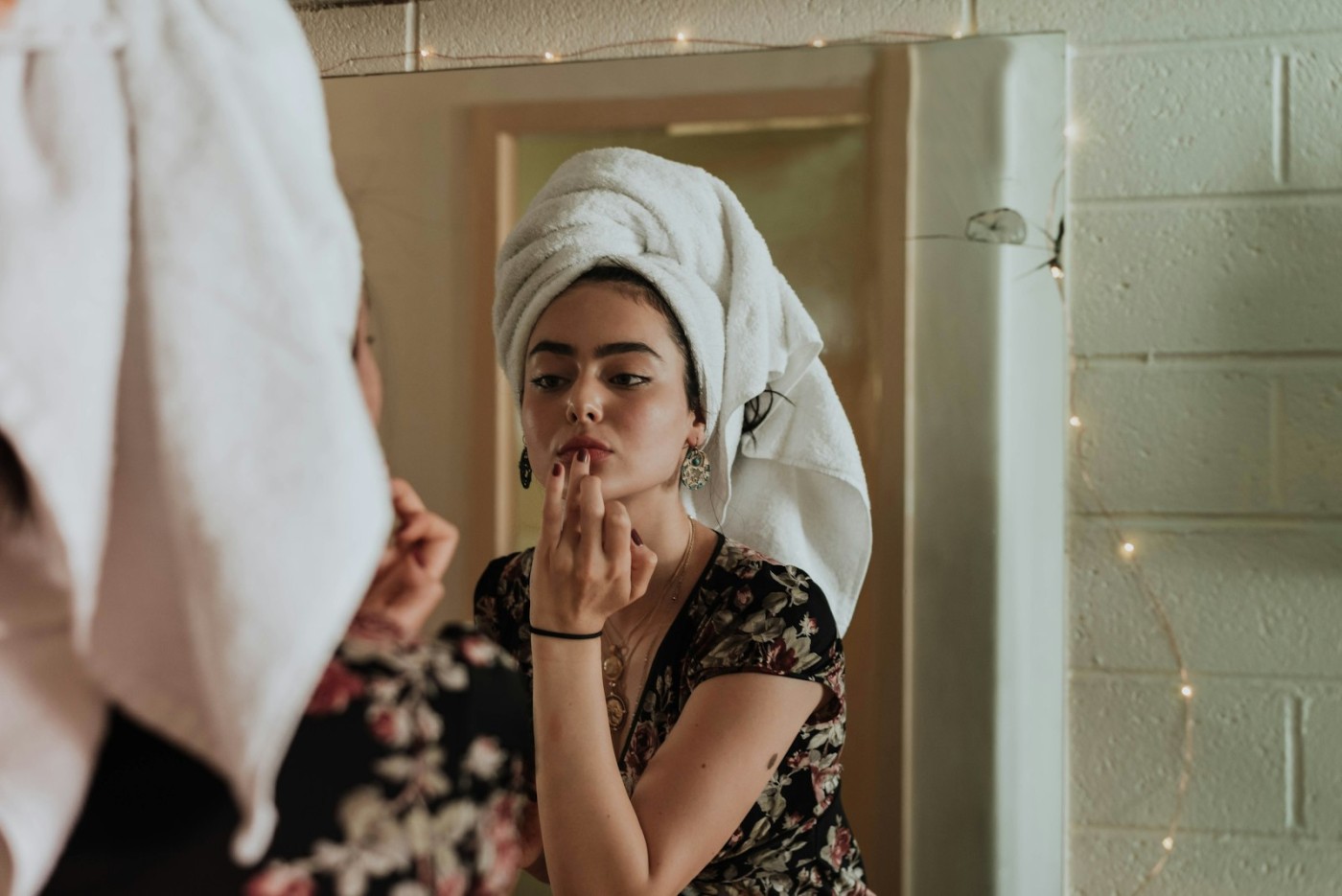
Even the right shade needs the right application. The basic steps are the same for most foundations:
- Prepare your skin. Cleanse your face and apply a moisturiser. Wait a few minutes for it to absorb. On well-cared-for skin, foundation spreads more evenly and lasts longer.
- Start with a little. For liquid foundation, a hazelnut-sized amount is enough. It's better to add more later than to remove excess make-up.
- Apply from the centre of your face outwards. That's where, around the nose and on the cheeks, we usually need coverage the most. Thin out the application towards the edges of your face and jaw so the foundation blends seamlessly into your neck.
- Build coverage in thin layers. One thin layer is enough for every day. Where you need more, add another, but not everywhere.
- Set if you like. Oily skin or a long day? Lightly dust your foundation with translucent powder so it lasts longer.
Your tool affects the final look:
- Fingers warm up liquid foundation so it blends nicely into the skin. The result is natural.
- A damp sponge presses foundation into the skin. You get lighter coverage and a fresh, dewy look.
- A foundation brush with dense bristles allows higher coverage. Use it to buff the foundation in with circular movements from the centre of your face outwards.
- Loose mineral foundation is applied with a kabuki brush: tip a little powder into the lid, swirl the brush in it, tap off the excess powder and buff it into your skin with circular movements. For more coverage, repeat.
The most common mistakes
- Choosing the first shade that looks “fine” on your hand. Test on your jaw.
- A shade that's too dark to look tanned. For a warm glow, a bronzer applied over foundation in the right shade is a better choice.
- Ignoring the undertone. If the foundation is the right depth but your face looks grey, pink or orange, try a shade with a different undertone.
- A thick layer everywhere. Two thin layers almost always look better than one thick one.
- The same shade all year round. In winter and summer it's worth checking whether your shade still suits you.
In short
- Foundation evens out your complexion. Choose the type according to your skin type and the look you want.
- The shade is defined by skin tone (depth) and undertone (cool, warm, neutral or olive).
- Find out your undertone from the veins on your wrist, how your skin reacts to the sun, and jewellery.
- Test shades on your jaw, in daylight, and compare them with your neck.
- With IDUN Minerals, always read the shade description, not just the name.
- Apply in thin layers, from the centre of your face outwards.
You can find all IDUN Minerals mineral foundations and powders, together with brushes for applying them, in our shop in the Make-up category. The Swedish brand develops its products with dermatologists; they are vegan and also suitable for sensitive skin.
Recommended in the article
-
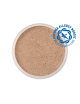 IDUN Minerals Mineral Powder Foundation Ingrid 7 g – IDUN Minerals
€23.10
-
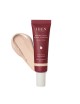 IDUN Minerals Hydra Soft Mineral Liquid Foundation Saga 30 ml – IDUN Minerals
€27.23
-
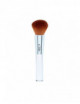 IDUN Minerals Kabuki Brush – IDUN Minerals
€14.50
-
 IDUN Minerals Ready Set Refresh Face Mist 100 ml – IDUN Minerals
€19.60
-
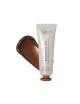 IDUN Minerals Bronzing Gel for Face and Body Sunset 30 ml – IDUN Minerals
€11.45

